Tennessee faces an access-to-justice crisis where many residents cannot afford legal representation for civil matters. The Tennessee Supreme Court is currently soliciting public feedback on strategies to improve accessibility. One proposed solution involves permitting trained legal helpers without law degrees to assist with basic, low-risk legal tasks.
This initiative would specifically benefit rural and underserved areas with limited access to attorneys. By offering services through community centers and nonprofits, these helpers could assist with navigating court processes and completing forms. The public is encouraged to submit recommendations to the Court by the March 16 deadline.
Every day, people in Tennessee face serious legal problems relating to housing, probate, family, debt, and more but most can’t afford or access a lawyer.
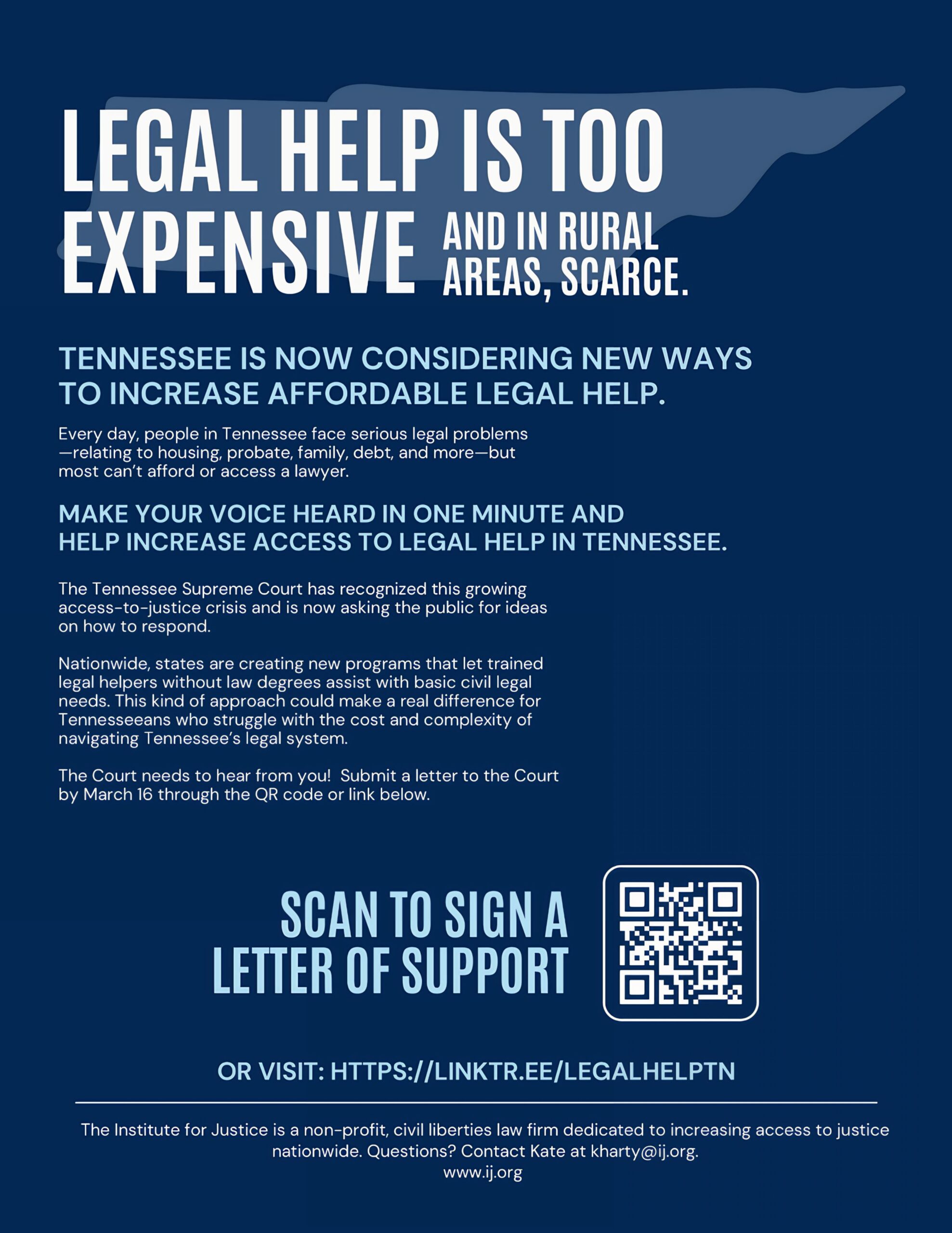
HELP INCREASE ACCESS TO LEGAL HELP IN TENNESSEE
The Tennessee Supreme Court has recognized this growing access-to-justice crisis and is now asking the public for ideas on how to respond. Nationwide, states are creating new programs that let trained legal helpers without law degrees assist with basic civil legal needs. This kind of approach could make a real difference for Tennesseans who struggle with the cost and complexity of navigating Tennessee’s legal system. The Court needs to hear from you! Submit a letter to the Court by March 16 through the QR code or link below.
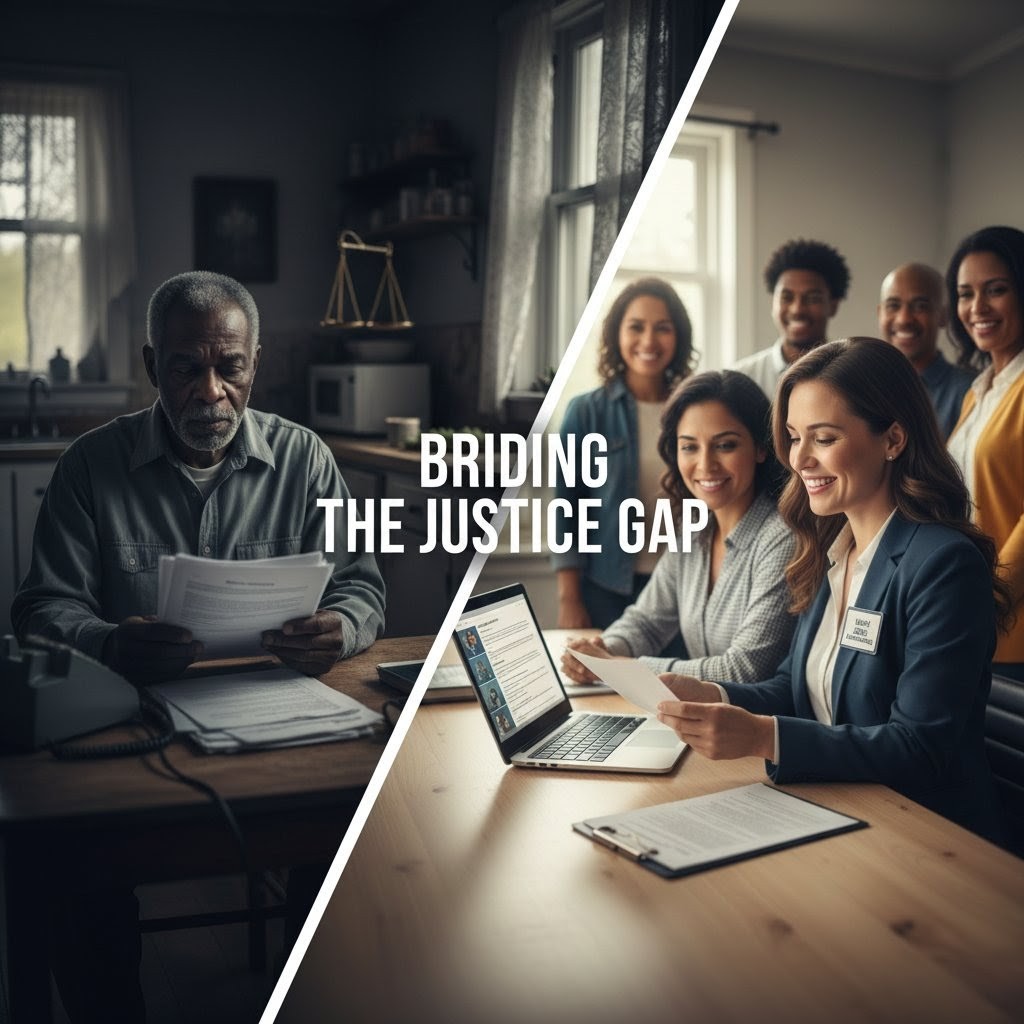
In many communities, there simply aren’t enough lawyers to go around. In rural areas especially, people may have to travel hours to find legal help or go without it entirely. That means people and families with legal challenges, big and small, often face lawyers, judges, and complicated forms and processes without help. The Tennessee Supreme Court knows this is a real problem and is asking the public to share ideas on how to make legal help easier to get.
We ask the Tennessee Supreme Court to allow trained legal helpers without law degrees to assist with basic civil legal needs. This is a smart, compassionate, and practical way to make justice more accessible. With short, easy-to-access training, these legal helpers could assist with common, low-risk issues, like filling out forms or understanding what to expect in court. They could offer help through places people already trust, such as libraries, nonprofits, churches, and community centers.
This kind of low-barrier approach could make a real difference for families and neighbors who need help now—especially in rural and underserved areas where legal help is hardest to find. Instead of creating new hurdles, it would bring practical support closer to home and make the justice system less overwhelming. As the Court considers what steps to take next, Tennesseans have an important chance to speak up about what access to justice should look like in their communities.
Do you agree that legal help is too expensive, and that it’s time to create access to more types of legal help across Tennessee?
Please sign your name to a letter asking the Tennessee Supreme Court to take action!
About Michael Eric Williams

Nashville‑based Michael Eric Williams is a respected LGBTQ+ policy advocate and communicator whose work centers on trauma‑informed care and institutional reform. His writing examines the lived realities of LGBTQ+ individuals in prison, offering both strategic insight and empathetic narrative. Michael champions truth, resilience, and public education as drivers of social change. He lives with his husband and their 16 year old chihuahua, Ms. Alice