When we think about criminal justice reform in Nashville, we often focus on sentencing guidelines, recidivism rates, and rehabilitation programs. But there’s a critical issue that rarely makes headlines in our community: the treatment of LGBTQ+ individuals locked inside Tennessee’s prisons and jails. For thousands of people behind bars in our state, their sexual orientation or gender identity transforms incarceration from punishment into survival mode.
If you live in Nashville or Davidson County Tennessee, chances are you’ve never had to think about what happens to LGBTQ+ inmates in facilities like the South Central Correctional Center in Clifton or the Northwest Correctional Complex. But understanding these realities is essential for anyone who cares about justice, human rights, and the values our community stands for. The crisis happening behind prison walls reflects how we treat our most vulnerable neighbors—and it demands our attention.
The Numbers Tell a Disturbing Story
LGBTQ+ people are significantly overrepresented in correctional facilities nationwide, and Tennessee is no exception. While LGBTQ+ individuals make up an estimated 4–5% of the general population, they represent a much higher percentage of people behind bars. Among women in state prisons, more than 33% identify as lesbian, gay, or bisexual. For transgender people—particularly Black transgender individuals—the statistics are even more alarming: nearly 47% report having been incarcerated at some point in their lives.
But it’s not just about who goes to prison. It’s about what happens to them once they’re there.
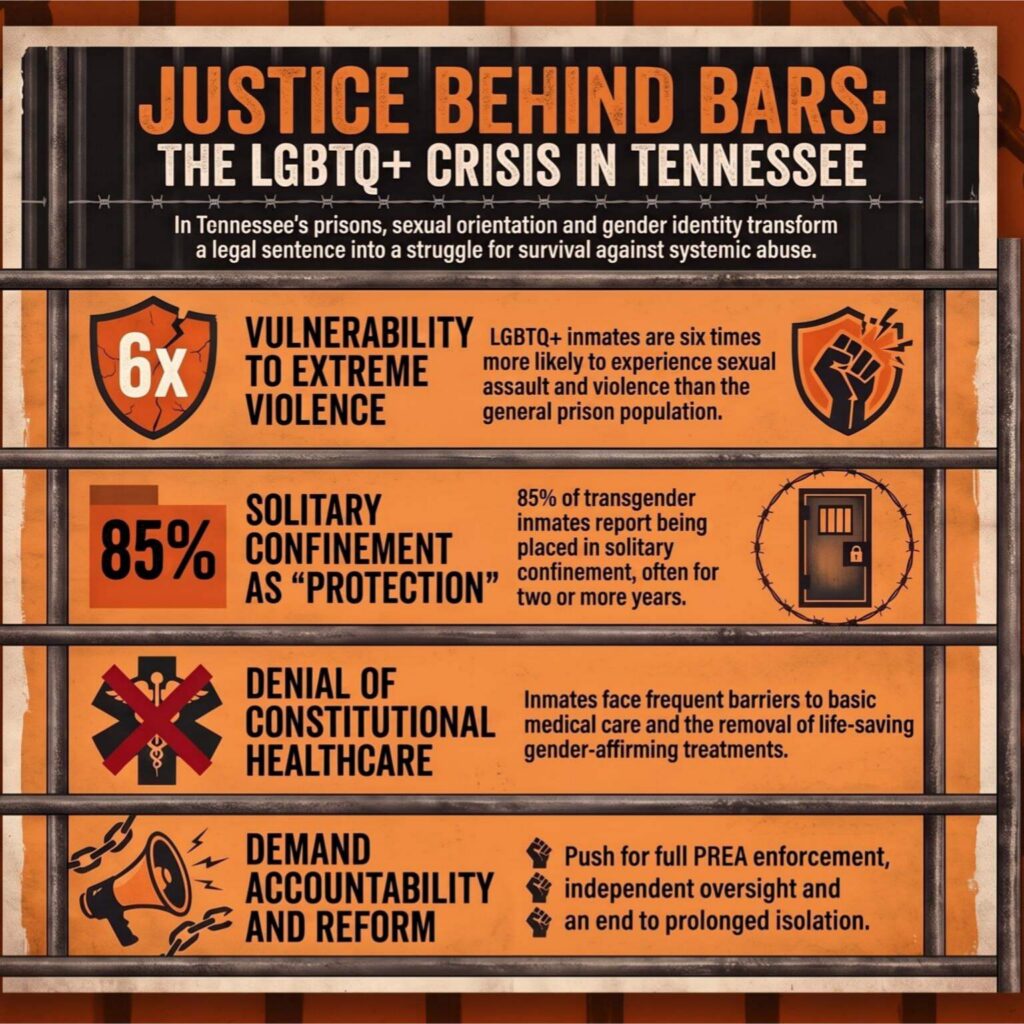
According to the Bureau of Justice Statistics’ National Inmate Survey, LGBTQ+ inmates experience sexual victimization at dramatically higher rates than their heterosexual counterparts. Twelve percent of lesbian, gay, and bisexual people in prisons reported sexual victimization from fellow inmates, compared to just 1% of heterosexual individuals. A groundbreaking 2015 survey by Black and Pink, an organization supporting incarcerated LGBTQ+ people, found even more troubling data: respondents were six times more likely to experience sexual assault and violence than the general prison population.
For transgender inmates specifically, the violence is pervasive. Nearly 90% of transgender survey respondents in a 2024 study reported experiencing extended solitary confinement at some point during their incarceration. More than half reported non-consensual sexual contact while behind bars.
These aren’t just statistics. These are our neighbors, community members, and fellow Tennesseans facing brutal conditions that would shock most Nashville residents.
When “Protection” Becomes Punishment
One of the most common—and troubling—responses to LGBTQ+ inmates’ vulnerability is placement in solitary confinement, often euphemistically called “protective custody.” Prison officials frequently justify this by claiming they’re protecting LGBTQ+ individuals from violence. But this “solution” creates its own crisis.
Research shows that 28% of LGB people in prisons were placed in solitary confinement or segregated housing within a single year, compared to 18% of heterosexual prisoners. For transgender inmates, the numbers are even worse: 85% reported being placed in solitary confinement at some point during their incarceration, with more than half spending two or more years in isolation.
Solitary confinement involves locking people in small cells for 22–24 hours per day with minimal human contact. The United Nations Special Rapporteur on Torture has stated that prolonged solitary confinement can amount to torture, causing severe psychological damage including anxiety, depression, hallucinations, and suicidal ideation.
Think about that: Tennessee’s correctional system often responds to the threat of violence against LGBTQ+ inmates by subjecting them to conditions internationally recognized as inhumane. We’re protecting people by isolating them in ways that cause lasting psychological harm.
Healthcare Denied: The Struggle for Basic Medical Treatment
Access to appropriate healthcare is a constitutional right for incarcerated individuals, established by the Eighth Amendment’s prohibition against cruel and unusual punishment. Yet LGBTQ+ inmates in Tennessee facilities routinely face barriers to even basic medical care.
For transgender inmates, the healthcare crisis is particularly acute. The Tennessee Department of Correction has policies addressing gender dysphoria, but implementation is inconsistent at best. Nationally, recent federal policies have banned gender-affirming care for transgender people in federal prisons, including hormone therapy that many transgender individuals had been receiving for years. While state facilities like those in Tennessee operate under different regulations, similar restrictive approaches often trickle down.
The Prison Rape Elimination Act (PREA) standards, implemented nationwide, require that transgender inmates receive appropriate medical screening and that housing decisions consider safety factors. PREA mandates that transgender individuals cannot be physically examined “for the sole purpose of determining the inmate’s genital status” and must be given the opportunity to shower separately from other inmates.
However, having policies on paper doesn’t guarantee their enforcement. Tennessee’s correctional system has faced criticism for impeding inmates’ access to healthcare information and services. A state comptroller’s investigation found that facilities like Northwest Correctional Complex restricted access to sick call forms and grievance procedures—the very mechanisms inmates need to request medical care.
Housing Decisions: Between Safety and Identity
Where LGBTQ+ inmates are housed within correctional facilities can mean the difference between relative safety and constant danger. PREA standards require individualized housing assessments that consider an inmate’s safety, with some consideration given to transgender inmates’ own views regarding their safety.
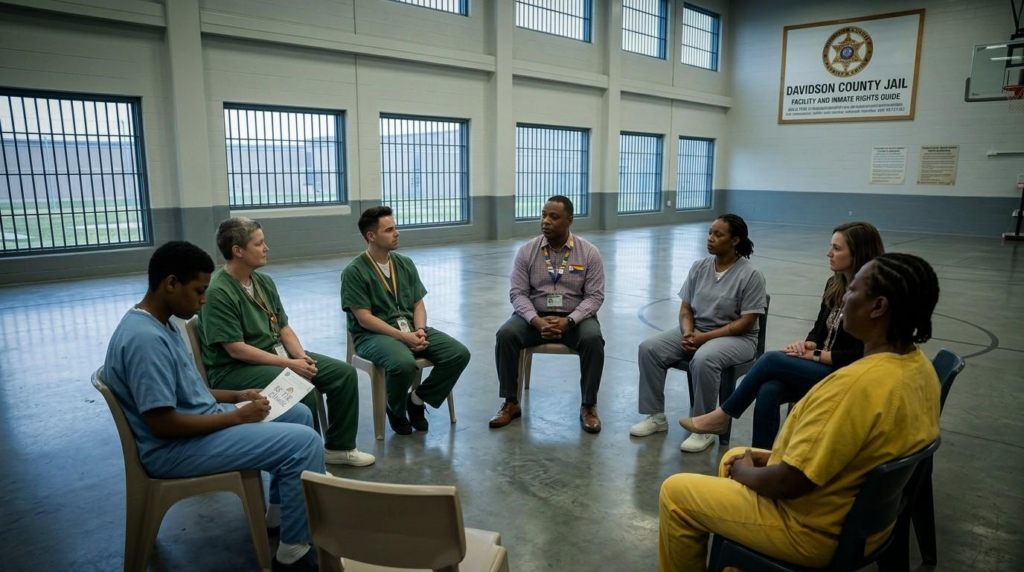
Yet the reality in Tennessee facilities often falls short. At South Central Correctional Center, LGBTQ+ inmates have organized a community network called “Be the Change”—reportedly the first openly LGBTQ+ community in Tennessee’s prison system—precisely because institutional protections have proven inadequate. With approximately 30 members, this grassroots group exists because incarcerated LGBTQ+ individuals have had to fight for their own safety when the system failed to protect them.
The housing challenge is especially complex for transgender inmates. Placement decisions must balance multiple factors: safety from violence, access to appropriate medical care, respect for gender identity, and facility security concerns. Too often, transgender inmates are housed based solely on their anatomy rather than their gender identity, placing transgender women in men’s facilities where they face elevated risks of assault.
What Nashville Can Do

Understanding these issues is the first step. As Nashville community members, we have the power to demand better from our state’s correctional system:
- Educate yourself and others: Share these realities with friends, family, and neighbors. The more Nashvillians understand what’s happening in Tennessee’s prisons, the harder it becomes to ignore.
- Support grassroots and community organizations: Support organizations like Be the Change that provide community and advocacy for LGBTQ+ inmates. Contact Tennessee Equality Project, ACLU of Tennessee, or similar organizations to learn how you can help.
- Advocate for policy reform: Contact your state legislators and demand:
- Full implementation and enforcement of PREA standards
- An end to prolonged solitary confinement for LGBTQ+ inmates
- Guaranteed access to appropriate medical care, including mental health services
- Independent oversight of Tennessee correctional facilities
- Training for correctional staff on LGBTQ+ issues and respectful treatment
- Push for transparency: Tennessee’s Department of Correction should be required to publicly report data on LGBTQ+ inmate safety, including rates of violence, solitary confinement use, and healthcare access.
The treatment of LGBTQ+ individuals in Tennessee’s correctional facilities is a human rights crisis happening in our own backyard. These are people who will eventually return to our communities—many to Nashville itself. How we treat them behind bars affects public safety, recidivism rates, and the fundamental values we claim to uphold.
Justice doesn’t end at the prison gates. It’s time for Nashville to demand accountability for the treatment of LGBTQ+ inmates in our jails.
About Michael Eric Williams

Michael Eric Williams is an advocate based in Nashville, Tennessee. He specializes in law enforcement communications, and institutional reform. His work blends clinical expertise with strategic storytelling to advance public understanding of addiction, justice,.and LGBTQ+ experiences in prison. Michael enjoys mountain biking and spending time with his husband Todd Tukey and their elderly chihuahua Ms Alice.