

My sister, Melissa Williams-Brown, conducted a long-term campaign of harassment and defamation against me. This involved orchestrating a scheme to illegally obtain my private educational records from the National Student Clearinghouse by posing as a legitimate employer and using forged consent forms.
The National Student Clearinghouse investigated the breach, resulting in updated security protocols and cooperation with international law enforcement agencies. While specific legal outcomes are currently sealed, the case illustrates the risks of degree fraud and the impact of digital identity exploitation on personal and professional life.
For media requests and inquiries regarding this matter call +1-615-239-5944 or email michael.e.williams@live.mercer.edu
This has not been a matter of family disagreement or occasional conflict. It has been a sustained campaign designed to impugn my character, sabotage my opportunities, and undermine my ability to succeed in life.
At the center of the allegations is my sister — Melissa Williams‑Brown, a 56‑year‑old former cybersecurity student at TAFE SA Adelaide, accused of orchestrating a scheme to unlawfully obtain private data and educational records belonging to myself and others.
How the Scheme Worked
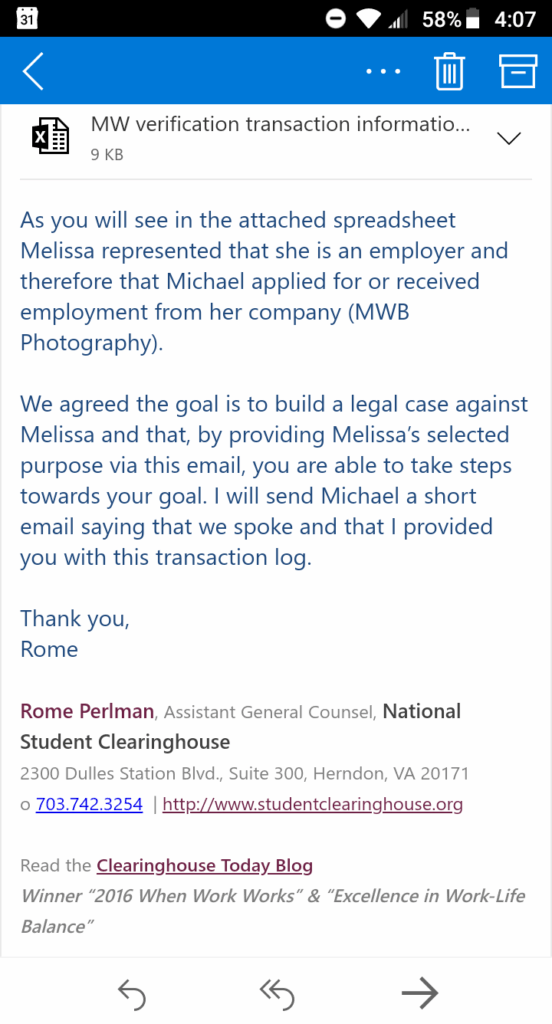
According Rome Perlman, Assistant General Counsel at the National Student Clearinghouse, Melissa Williams‑Brown posed as a legitimate employer conducting background checks. By impersonating hiring authorities and submitting fraudulent consent forms, Ms Williams-Brown illegally accessed protected educational records through the National Student Clearinghouse, a U.S. Department of Education affiliate.
Melissa Williams-Brown Steals My College Transcripts from the National Student Clearinghouse
![From: Rome Perlman perlman@studentclearinghouse.org
Subject: IMPORTANT: Notification from the National Student Clearinghouse Date: Jan 8, 2018 at 3:05:34 PM To: [REDACTED]
Cc: Rome Perlman perlman@studentclearinghouse.org
Dear Ms. Brown,
I am writing on behalf of the National Student Clearinghouse to request that you immediately cease and desist giving any third parties access to information provided by the Clearinghouse through our verification services. This includes posting on social media the results of a verification of information.
The Terms and Conditions that you agreed to in order to use the verifications service provided by the Clearinghouse state that “[a] Requestor may obtain information from the Clearinghouse under these Terms and Conditions on behalf of a single employer, employment agency, background screening firms, retailer with student or graduate discount, provider of services based on student or graduate status or similar organizations, and may release the information to that single entity. The Requestor agrees that it will not otherwise release, transfer, distribute, share or re-disclose any information that it has obtained from the Clearinghouse to any other entity or individual, whether for sale or free of charge, except to the student or certificate holder whose enrollment, degree or certification was verified.” Providing information to any third party, including posting that information on social media websites, is a violation of the Terms and Conditions you agreed to prior to performing the verification.
Furthermore, the Terms and Conditions state that “[i]n order to be eligible to verify the dates of attendance, degrees, and other educational achievements provided by a student, the Requestor certifies that the student has applied for or received products, services or employment that depend upon verification of degree and/or enrollment status.” If the information was not requested for one of these authorized purposes, the verification request constituted a fraudulent use of our services. As such, we request that you immediately destroy or permanently erase (on all forms of physical or electronic media) the information you received from the Clearinghouse regarding Michael Williams and delete any copies of the information that you have posted online. Please email me at perlman@studentclearinghouse.org no later than Friday, January 12, 2018 to confirm that you have destroyed the information you received from the Clearinghouse from all such locations.
Sincerely,
Rome Perlman, Assistant General Counsel
Rome Perlman, Assistant General Counsel, National Student Clearinghouse 2300 Dulles Station Blvd., Suite 300, Herndon, VA 20171
o 703.742.3254 | http://www.studentclearinghouse.org
Read the Clearinghouse Today Blog
Winner “2016 When Work Works” & “Excellence in Work-Life Balance”
This message is proprietary to the National Student Clearinghouse, is intended only for the addressee and may contain confidential or privileged information. If you receive this message in error, please contact the sender and delete all copies.](https://michaelericwilliams.com/wp-content/uploads/2026/01/02f102c9-3cfd-4d92-b6e1-0c724399f564-1_all_33450.png "National Student Clearinghouse")
Method of Fraud: Melissa Williams-Brown allegedly used forged consent forms and posed as an employer or authorized background checker to bypass privacy protections.
Targeted Information: Her actions were aimed at gaining unauthorized access to sensitive student data, including degree verification and enrollment records, which she then utilized for her own private gain.
Legal Impact: The incident is frequently cited in discussions of degree fraud and the vulnerabilities of national educational databases.
Her Motive: Melissa Lied About Earning a Degree from George Washington University for decades
Melissa Williams-Brown publicly claimed to hold a bachelor’s degree from George Washington University. After the university verified that these credentials were manufactured, she was removed from promotional materials by TAFE, an Australian vocational education provider. Shortly thereafter Williams-Brown removed the ‘fake degree’ from her official LinkedIn page.
The harassment intensified after it became public knowledge that Melissa Williams-Brown had lied about earning a college degree from The George Washington University. For decades she published various articles in the Los Angeles Times and other newspapers claiming a degree when, in fact, school officials stated she was never enrolled. When I actually earned my degree from Mercer University in 2017, Melissa ramped up the harassment and published my (stolen) college transcripts on Twitter in an attempt to embarrass me. Maybe Melissa was jealous or upset she had been exposed as a fraud? Nonetheless, stealing my records from the National Student Clearinghouse was reprehensible and criminal.
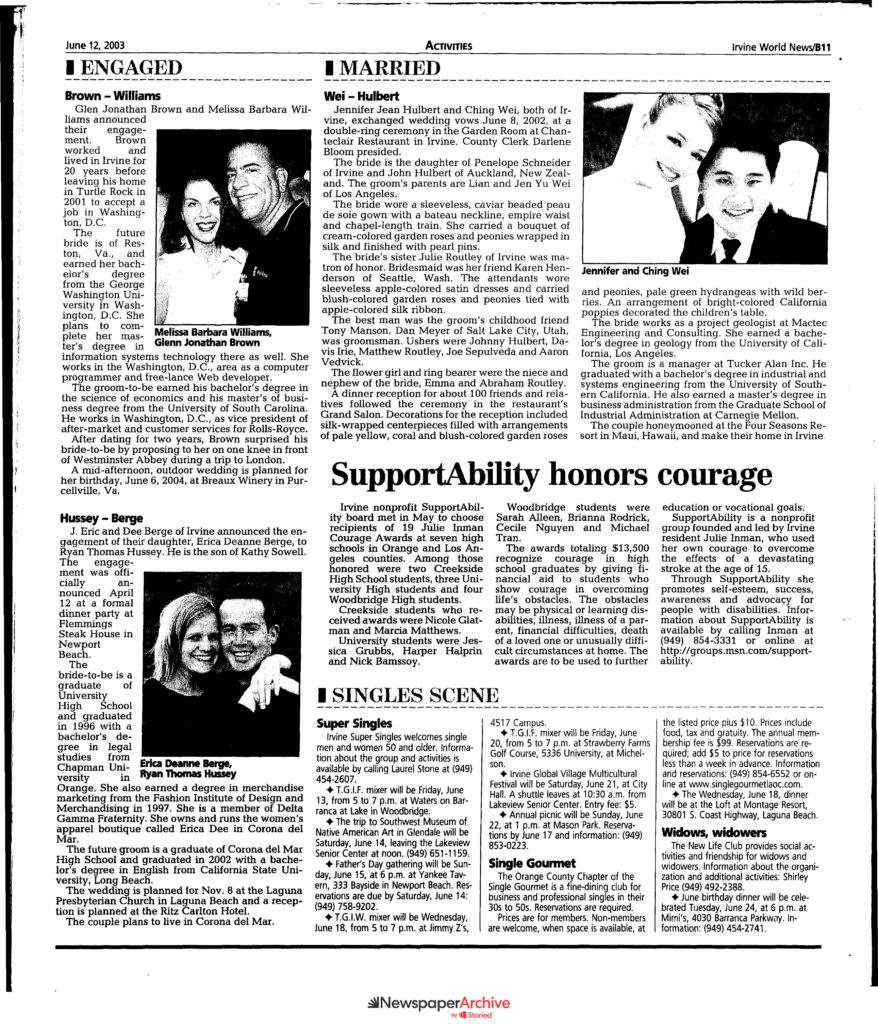
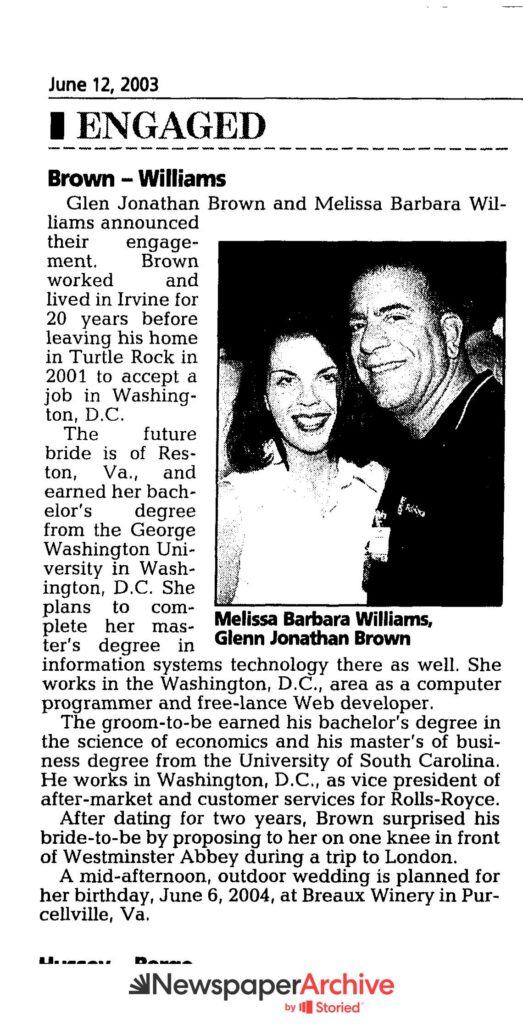
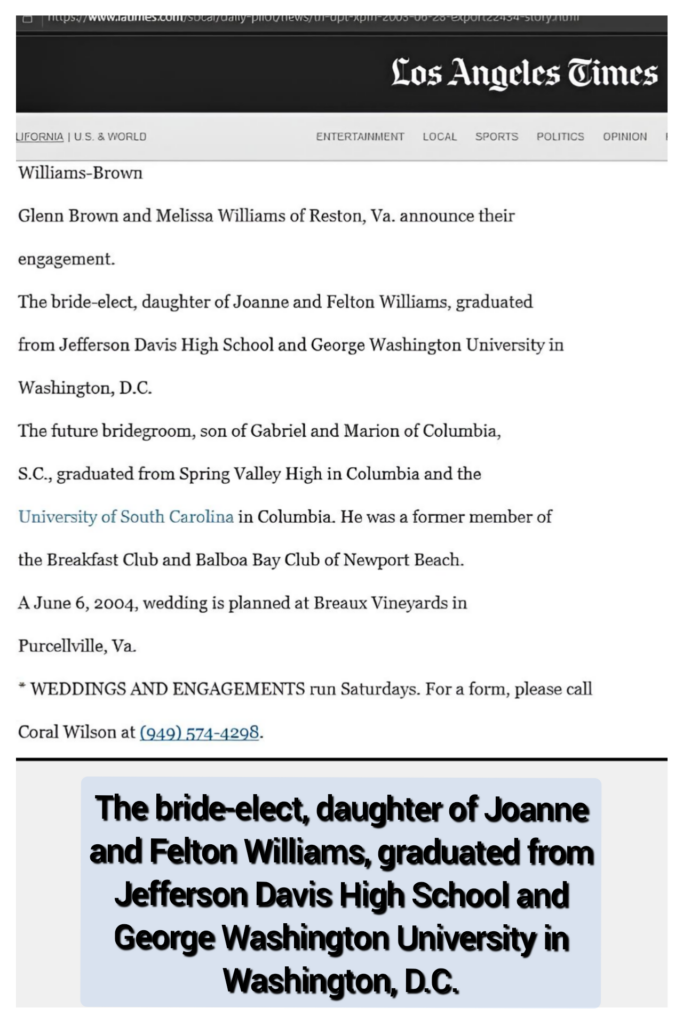
and Felton Williams, graduated from Jefferson Davis High School and George Washington University in
Washington, DC.”
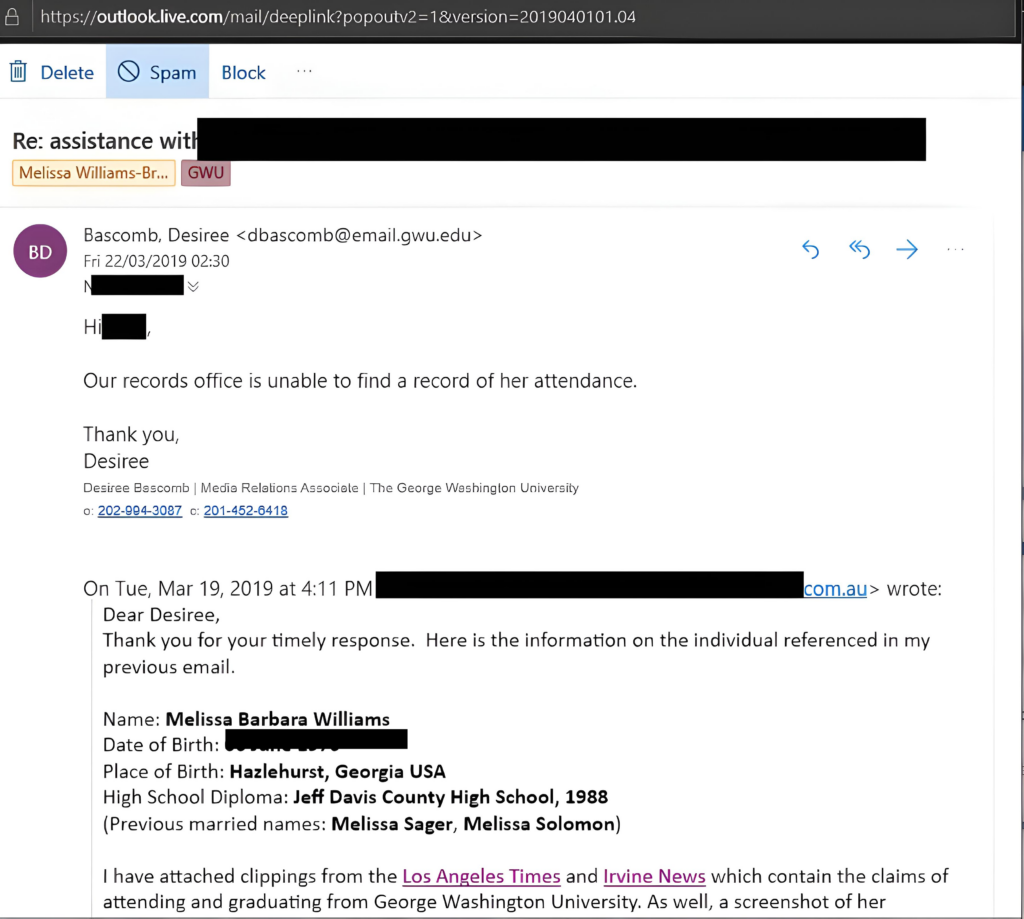
Desiree Bsscomb, Media Reletions Associate
The George Washington University
Telephone: 202-904-3087
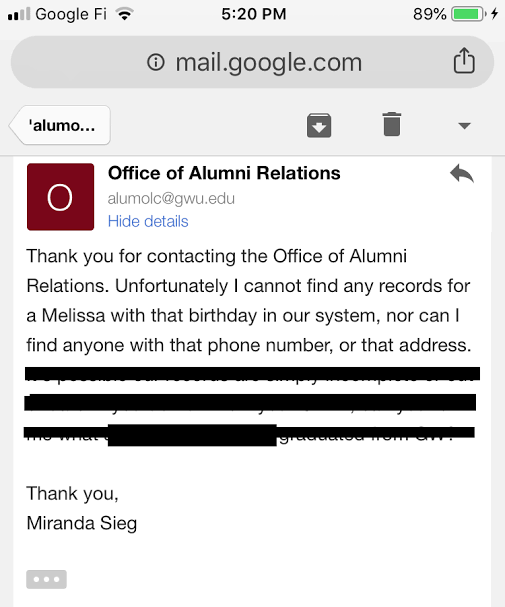
–Miranda Sieg, The George Washington University
About the National Student Clearinghouse
The National Student Clearinghouse is a nonprofit organization that provides educational reporting, data exchange, and verification services for thousands of colleges and universities in the United States. Its primary role includes: Enrollment Verification: Confirming student status for lenders and insurers.
In 2023 the National Student Clearinghouse reported that nearly 900 colleges and universities across the U.S. had data stolen during attacks by an overseas ransomware gang exploiting their file-sharing system.
Public Statements from the National Student Clearinghouse, Law Enforcement and Related Stakeholders
In a breach notification letter filed with the Office of the California Attorney General, Clearinghouse said that attackers gained access to its file transfer server and stole files containing a wide range of personal information.
The National Student Clearinghouse manages educational reporting, data exchange, verification, and research services for 3,600 colleges and universities as well as 22,000 high schools. The organization first confirmed that it was affected by exploitation of their file sharing system by an overseas ransomware gang. Dozens of schools published notices confirming that student and alumni data was accessed in the breach but it was never clear just how many colleges or universities were affected. In the California filing, the National Student Clearinghouse provided a list of affected schools totalling nearly 890 — covering almost every state and including several of the largest, most prominent universities in the U.S.
What does the National Student Clearinghouse do?
Degree Verification: Providing authorized background checkers with confirmed graduation data.
Research: Tracking student mobility and success rates through the National Student Clearinghouse Research Center.
Investigations of Melissa Williams-Brown
TAFE SA Actions and Law Enforcement Referral
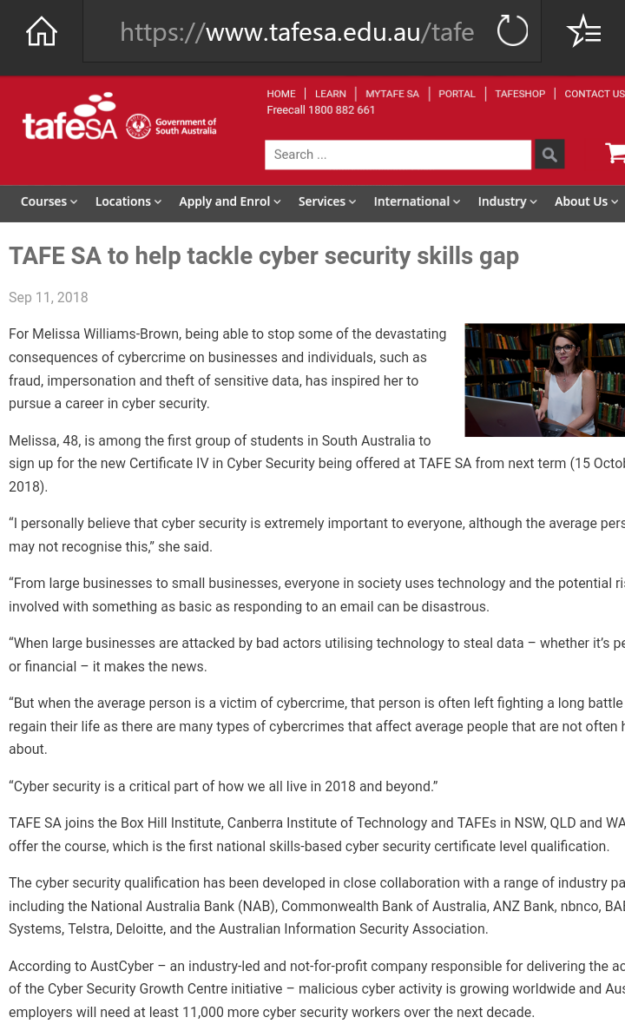
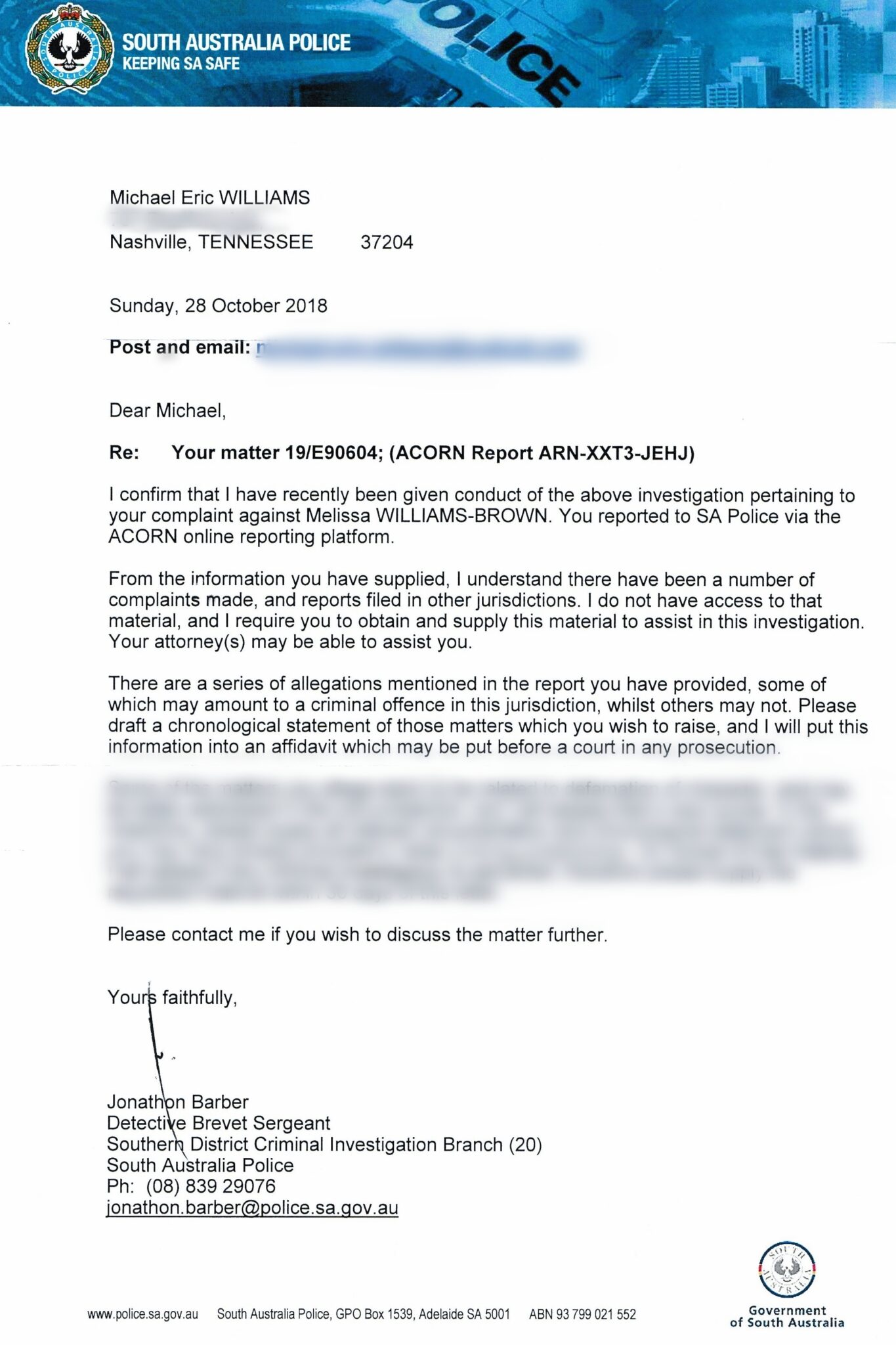
Melissa Williams-Brown, a resident of Adelaide South Australia, was implicated in a significant data security and degree fraud case involving the National Student Clearinghouse (NSC). According to an extensive investigation on the incident, Melissa Williams-Brown used forged consent forms and posed as an employer or background check agent to gain unauthorized access to protected educational records.
Data Compromise: Records obtained from South Australia Police via a freedom of information request, outlined how Melissa Williams-Brown obtained sensitive personal data and academic records from the National Student Clearinghouse through deceptive methods, forgery and wire fraud.
Criminal Investigation of Melissa Williams-Brown by South Australia Police
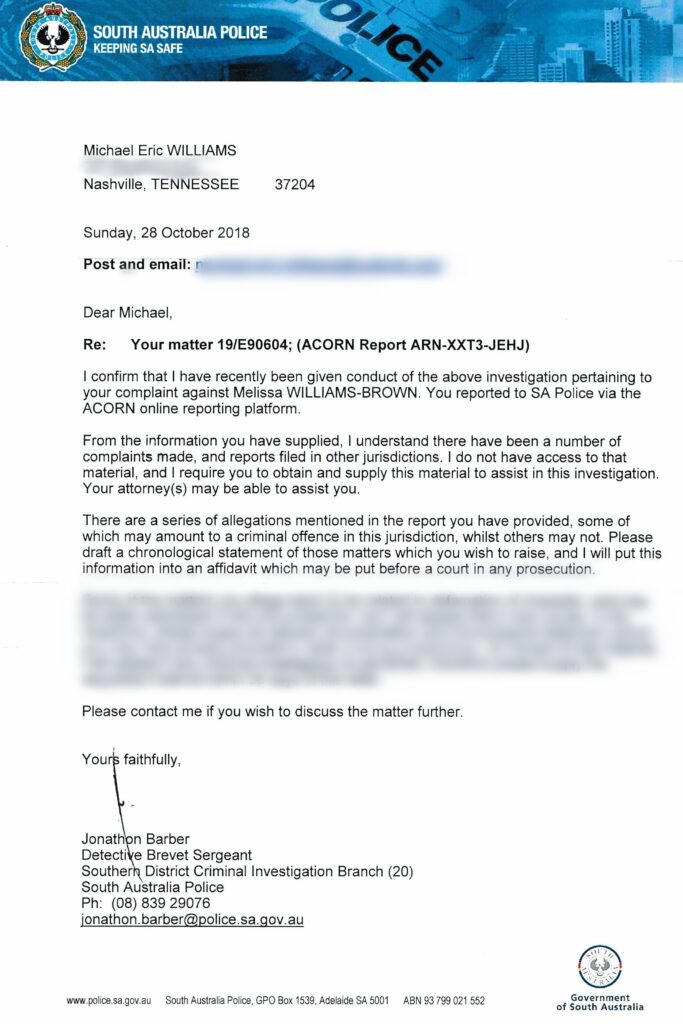
As of December 2025, the specific criminal or civil legal outcome for Melissa Williams-Brown regarding the National Student Clearinghouse (NSC) case are sealed under court orders. The case centers on allegations that Melissa Williams-Brown gained unauthorized access to protected educational records from the NSC by posing as an employer and using forged consent forms to obtain sensitive academic data.
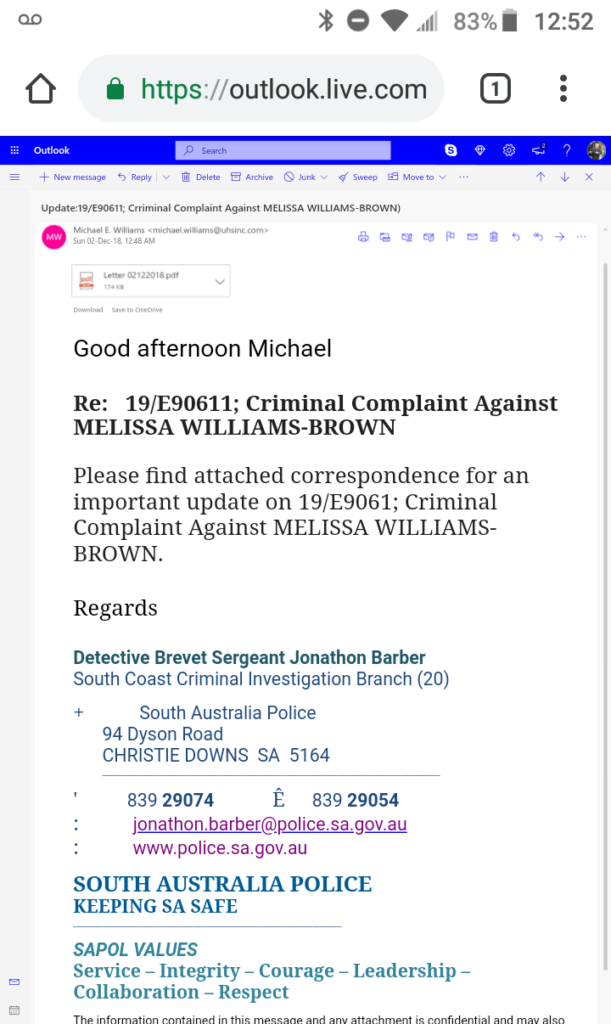
South Australia Police (SAPOL)
Coast Criminal Investigation Branch
94 Dyson Road CHRISTIE DOWNS SA 5164
While the NSC took action to mitigate the security breach and cooperated with investigations, the NSC cannot confirm at this time a specific prison sentence or fine for Melissa Williams-Brown related to this particular incident.
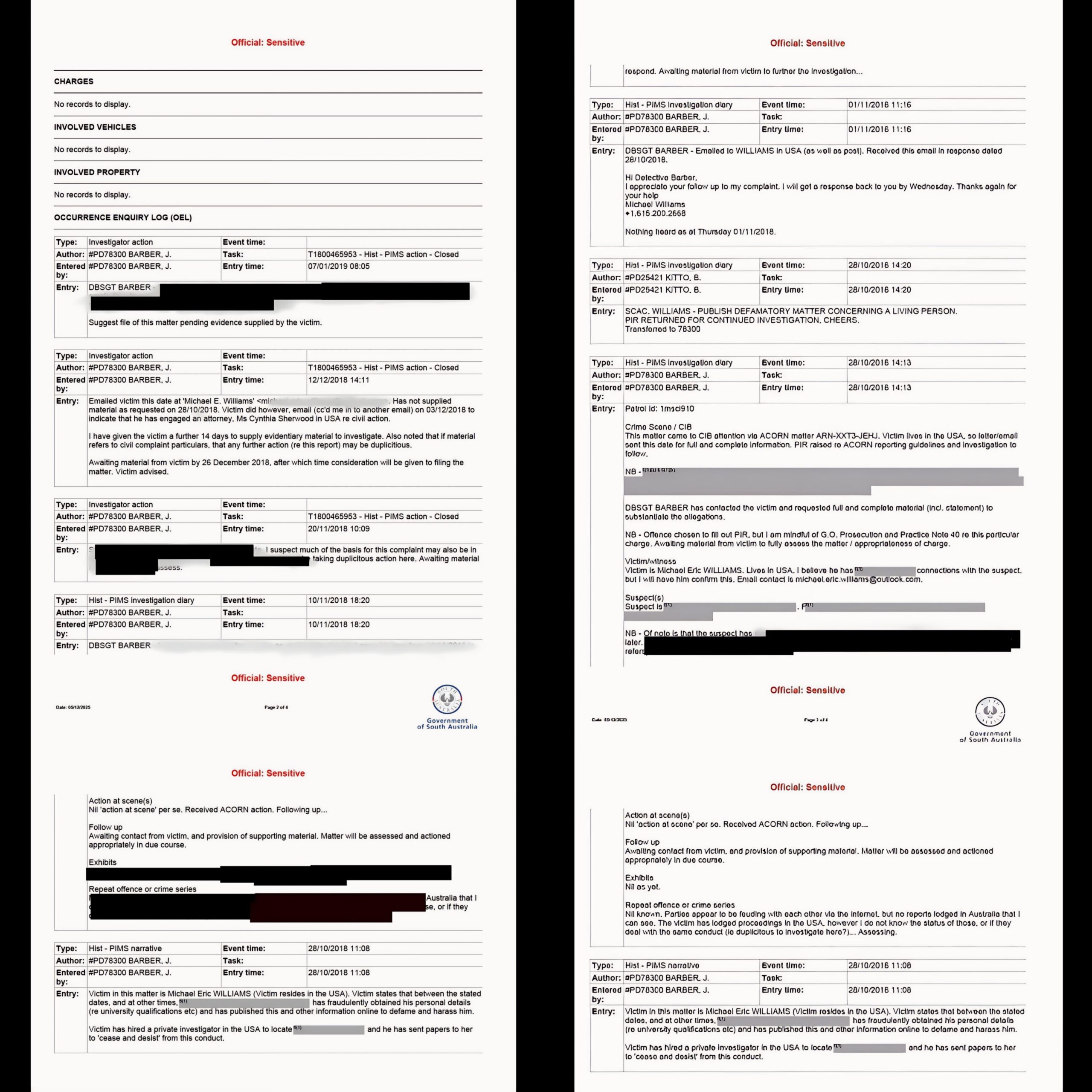
The case is cited in discussions regarding degree fraud and the illegal procurement of academic credentials
Related Enforcement
While Melissa Williams-Brown’s specific sentencing details remain underreported, cases involving similar degree fraud and unauthorized data access typically result in the following types of consequences.
Permanent Banning: The National Student Clearinghouse typically revokes all access to its verification systems for individuals or entities found to have misused the platform.
Civil Litigation: Organizations like the NSC may pursue civil damages for breach of terms of service and reputational harm.
Criminal Charges: Such activities often lead to state or federal charges for wire fraud, identity theft, or forgery, depending on the jurisdiction and the extent of the data compromise. For verified updates on specific case filings, you may consult the National Student Clearinghouse’s official newsroom or public court records in the jurisdiction where the charges were filed.
New Security Measures Implemented at National Student Clearinghouse

After the allegations against Melissa Williams-Brown surfaced, the National Student Clearinghouse took several internal and external measures to address the security breach and prevent future unauthorized access to sensitive educational data.
Access Revocation: The NSC immediately terminated Melissa Williams-Brown’s access to its verification systems upon discovering the fraudulent nature of her requests.
Account Investigation: The organization conducted a forensic review of her account activity to determine the extent of the data compromise and identify which student records had been accessed via forged documents.
Law Enforcement Cooperation: The NSC collaborated with federal authorities, providing evidence of the forged consent forms and the deceptive methods used (such as posing as an employer) to support potential criminal investigations into wire fraud and identity theft.
Enhanced Verification Protocols at National Student Clearinghouse
To prevent similar “social engineering” attacks, the NSC implemented stricter verification requirements.
Consent Form Audits: The organization increased the frequency and rigor of manual audits for third-party consent forms submitted by independent agents or background check entities.
Multi-Factor Authentication (MFA): The NSC accelerated the rollout of mandatory MFA for all commercial users to ensure that only authorized account holders could access the database.
Identity Validation: New protocols were established to better verify the identity of small-scale commercial users (such as independent photographers or private investigators) before granting them access to verify degree or enrollment information.
Australian Law Enforcement Authorities believe additional victims may exist
Michael Eric Williams was one of the individuals whose private data was targeted and exploited. His experience reflects the emotional and professional fallout that occurs when someone weaponizes personal information for malicious purposes.
Because the alleged offenses span both U.S. and Australian systems, the case involves multiple agencies and international cooperation. The South Australia Police (SAPOL) Southern District Criminal Investigation Branch is currently handling the matter in Australia while the FBI Computer Crimes Division is working on it from the USA
Why This Case Matters
My identity, academic history, and personal information were accessed without consent. The intrusion wasn’t random—it was deliberate. As a professional who advocates for equitable care and institutional accountability, I have chosen to speak out not only to protect myself but to help others recognize the warning signs of digital impersonation and data exploitation.
Ultimately, truth and resilience remain the most potent counter-narratives to digital character assassination. By exposing the mechanisms of online harassment and demanding rigorous verification standards, we can begin to build a digital environment where human dignity takes precedence over viral destruction.
About Michael Eric Williams
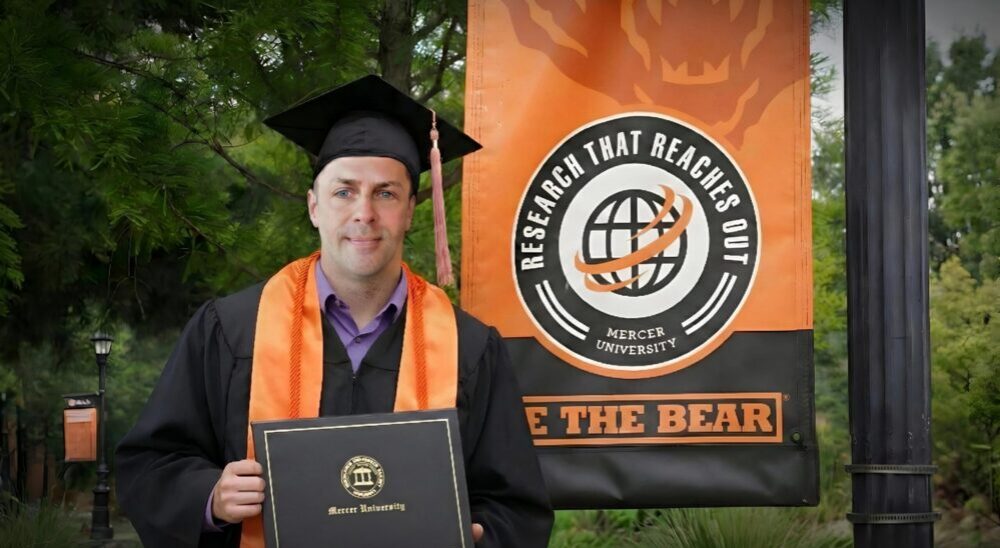
Michael Eric Williams is an advocate based in Nashville, Tennessee. He specializes in law enforcement communications, and institutional reform. His work blends clinical expertise with strategic storytelling to advance public understanding of addiction, justice,.and LGBTQ+ experiences in prison. Michael enjoys community outreach and spending time with his husband Todd Tukey and their chihuahua, Ms Alice.